




Cosmetic Dentistry
Discreet, comfortable teeth straightening designed around your life, your schedule, and the smile you've been wanting for years.
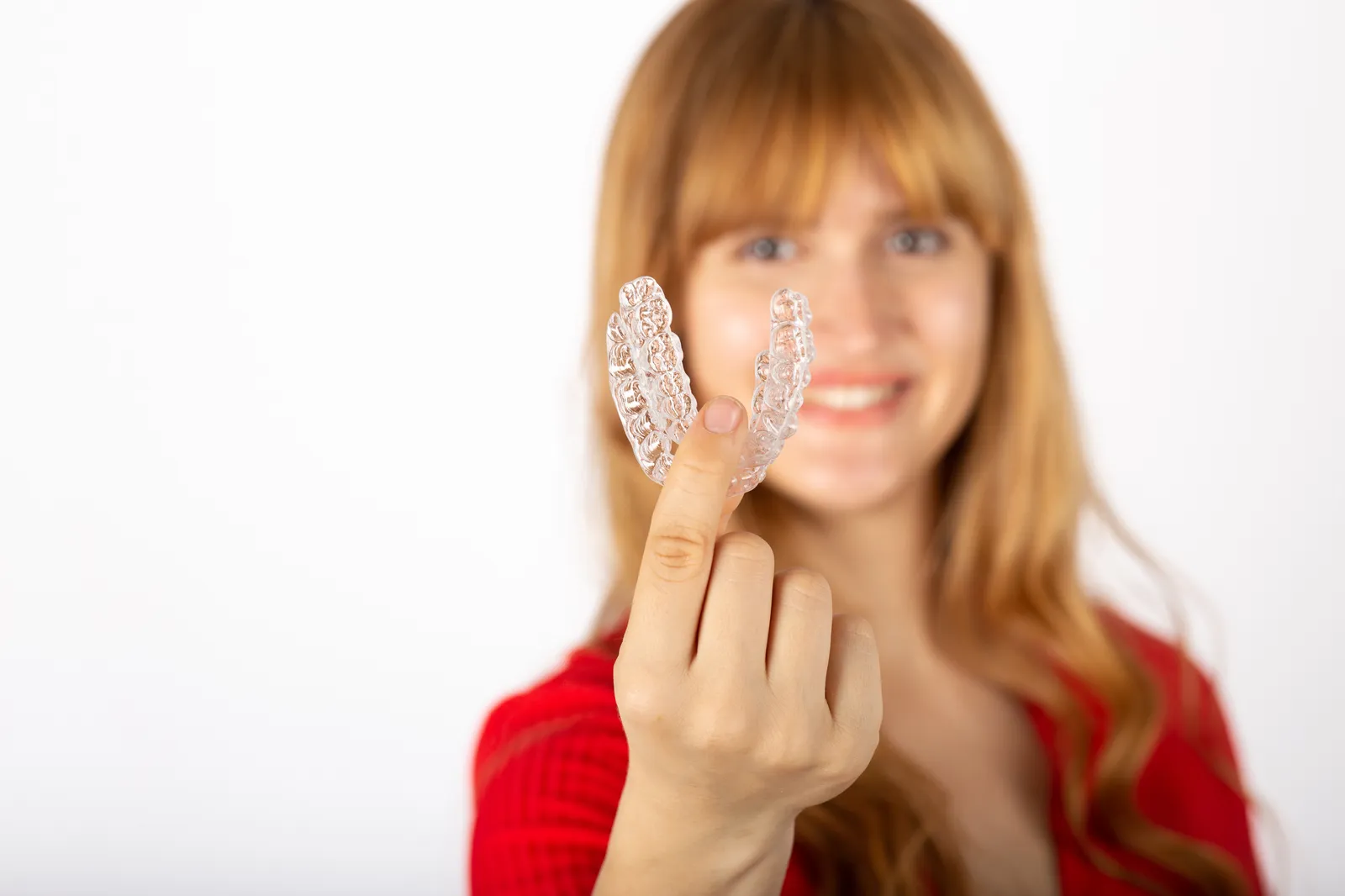
Crooked, crowded, or gapped teeth affect more than how your smile looks in photos. Misalignment changes how your teeth meet when you bite, how easily food gets trapped between them, and how much pressure certain spots in your mouth absorb every time you chew or clench. Over months and years, that uneven wear can contribute to chipped edges, gum irritation along crowded areas, and a bite pattern that feels harder to clean no matter how carefully you brush and floss.
Clear aligners give adult patients and teens a way to correct these issues without a mouth full of metal brackets and wires. A series of custom-fitted, nearly invisible trays gradually guides your teeth into better alignment, each one shifting your bite a small, calculated amount before you move on to the next set in the sequence. Because the trays are removable, you keep eating the foods you enjoy, brushing and flossing normally, and showing up to work, school, or social events without feeling self-conscious about your treatment.
At Gallagher Family Dentistry, we build every clear aligner plan around a full clinical evaluation of your bite, jaw alignment, and gum health, not just your front teeth's appearance. That means we catch and address the underlying reasons your teeth drifted in the first place, so your results hold up long after your last tray is finished.
Alignment issues show up differently from one patient to the next. Some people notice obvious crowding in the front teeth, while others only discover a problem once their dentist points out uneven wear or bite strain during a routine exam. The signs below are common reasons patients in Metairie come to us asking about clear aligner treatment.
Not every alignment concern is a good match for clear aligners on its own, and some cases benefit from a combination of approaches. That is why a hands-on clinical evaluation, including digital scans and a bite assessment, comes before we recommend any treatment plan.
Misalignment rarely has a single cause. More often, several factors build on each other over the years, gradually changing the position of your teeth and the way your bite comes together.
Inherited jaw proportions that are too small for the number of teeth coming in are one of the most frequent reasons for crowding, often appearing in families with a history of orthodontic treatment.
Thumb sucking, prolonged pacifier use, and tongue thrusting during developmental years can push front teeth forward or narrow the dental arch.
When a baby tooth or adult tooth is lost too early, neighboring teeth can drift into the open space, throwing off spacing for the rest of the arch.
Chronic clenching and grinding gradually wears down enamel unevenly and can nudge teeth into new positions over time, especially during sleep.
Even patients who had straight teeth as teenagers often see gradual lower front crowding develop in their thirties and forties as the jawbone and ligaments change with age.
Teeth are naturally inclined to drift back toward their original position; without consistent retainer use after prior orthodontic work, relapse is extremely common.
Every clear aligner plan we build is based on your own teeth, your own bite, and your own goals. Here is what the process typically looks like from your first visit to your final tray.
We start by listening to what bothers you about your smile and your bite, then explain honestly whether clear aligners are a strong match for your goals and timeline.
Digital scans, photographs, and a full bite assessment give us a precise 3D picture of your teeth, roots, and jaw alignment before any tray is designed.
We map out the entire sequence of movements your teeth will make tray by tray, giving you a projected timeline and letting you preview your expected results before committing.
You will receive your first sets of custom trays along with clear instructions on wear time, and small attachments may be bonded to certain teeth to help guide more precise movements.
We check your progress at regular intervals, adjust the plan if needed, and finish treatment with a custom retainer to protect your results for the long run.
Clear aligner treatment is about more than appearance. Correcting your bite changes how your mouth functions every single day, often in ways patients do not fully anticipate until treatment is complete.
Once teeth are properly spaced, floss glides through more easily and your toothbrush reaches surfaces that were previously hidden behind overlap, lowering your risk of decay and gum disease.
Correcting uneven contact points reduces excess pressure on individual teeth, which can ease jaw fatigue and lower the risk of chips and fractures over time.
Patients consistently tell us they smile more freely in photos, speak more comfortably during presentations, and feel more at ease in social settings once treatment wraps up.
Straighter, well-spaced teeth are easier to maintain through routine cleanings and exams, helping protect the health you have worked hard to build with us over the years.
Clear aligners rely on controlled, incremental force applied continuously over time. Each tray is engineered to move specific teeth by a small, carefully measured amount, generally a fraction of a millimeter, before the next tray in the series takes over. When aligners are worn for the recommended 20 to 22 hours per day, that force stays steady and predictable, allowing the bone and ligaments around each tooth to remodel smoothly.
Inconsistent wear interrupts that process. Teeth that have started moving can begin drifting back toward their original position any time a tray is left out for extended periods, which forces the tray to work harder to recapture lost progress, or in some cases requires us to rescan and generate additional trays. This is one of the most common reasons treatment timelines extend beyond the original estimate.
We build realistic wear schedules around your actual lifestyle, whether that means working around a demanding job, braces-wearing teenagers juggling sports, or patients who simply need extra reminders in the first few weeks. Staying in close contact with our team during treatment, rather than trying to manage the entire process alone, is what keeps most patients on schedule and satisfied with their final results.
Good habits at home keep your aligners working the way they were designed to and help protect your teeth and gums throughout treatment.
Anything besides plain water should be consumed with aligners out to avoid staining, warping, or trapping food particles against your teeth.
Trapping food or bacteria against your teeth under a tray for hours raises your risk of decay, so a quick brush before reinserting your aligners makes a real difference.
Rinse each tray when removed and brush it gently with a soft toothbrush to prevent buildup, odor, and visible cloudiness.
Napkins are not a safe place to store a tray during meals out; a proper case prevents loss and protects your current aligner from damage.
Setting a daily reminder helps you stay honest about hitting the recommended 20 to 22 hours of wear each day, which keeps your plan on schedule.
Progress visits let us confirm your teeth are tracking correctly and catch any needed adjustments before they become bigger setbacks.
These habits make a genuine difference, but they work alongside professional care, not in place of it. Regular visits with our team remain the best way to confirm your treatment is progressing as planned.
"Patients often come to us thinking clear aligners are just a cosmetic fix. What they find is a bite that feels more comfortable, easier to clean, and a smile they are proud to show. We walk through every step together, and we never rush the process."
Answers to the questions we hear most often from Metairie patients considering clear aligner treatment.
BOOK YOUR VISIT
Join the Metairie families who trust Gallagher Family Dentistry New. New patients and emergencies are always welcome.