




Restorative Dentistry
Permanent, natural-looking tooth replacement designed to restore your bite, your confidence, and your comfort for years to come.
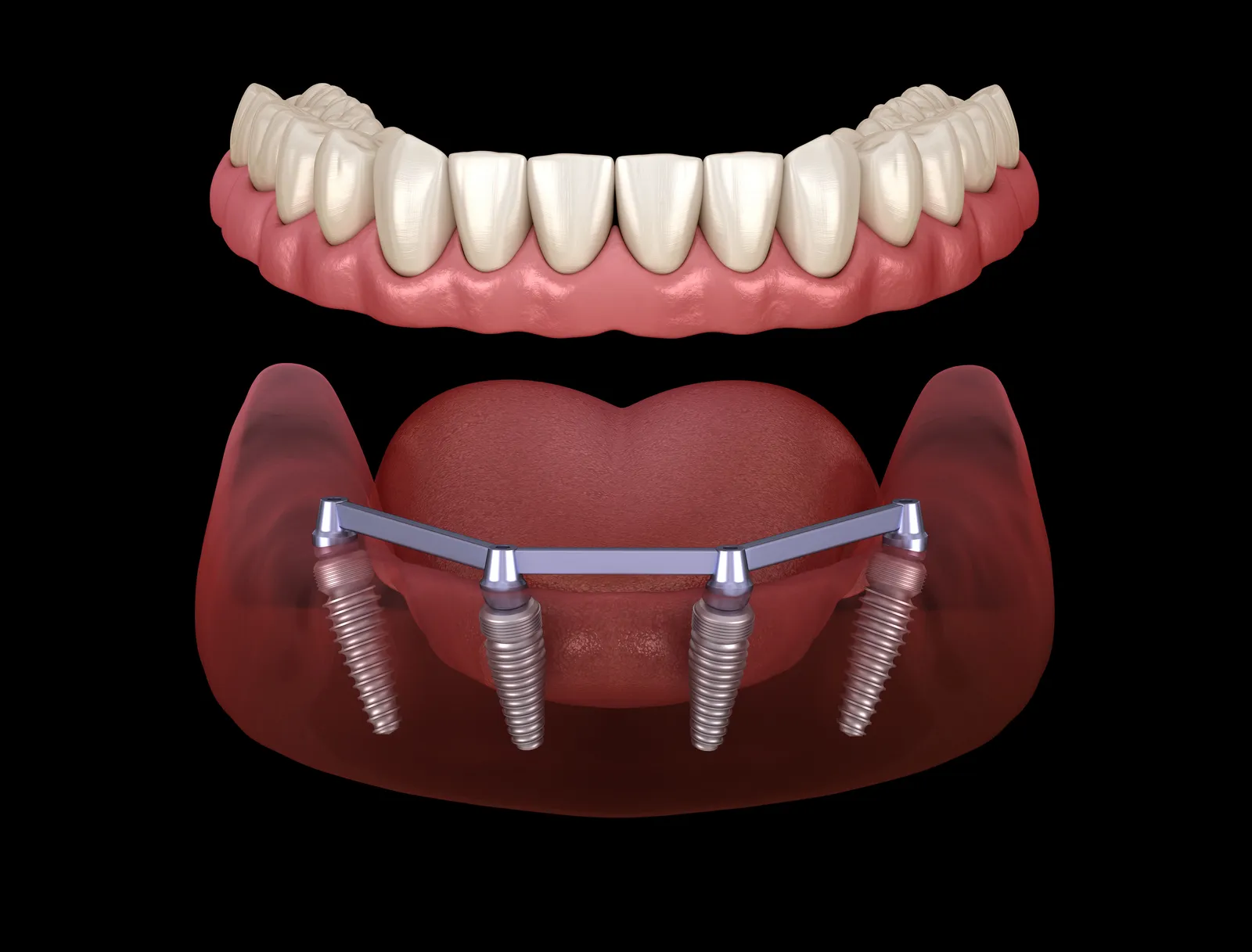
Losing a tooth changes more than your smile. It changes how you chew your food, how clearly you speak, and how the bone beneath your gums behaves over time. When a tooth root is gone, the surrounding jawbone no longer receives the stimulation it needs, and it begins to shrink. Left unaddressed, that process can shift neighboring teeth, deepen facial lines around the mouth, and make future tooth replacement more complicated. Dental implants are the only restorative option that replaces the tooth root itself, not just the visible crown, which is why they remain the gold standard in modern restorative dentistry.
At Gallagher Family Dentistry, we approach implant dentistry as a long-term investment in your oral health, not a quick fix. Every implant case begins with a careful evaluation of your bone density, bite alignment, and gum health, because a successful implant depends on more than the titanium post itself. We take time to walk you through your options, whether you need a single implant to replace one missing tooth, an implant-supported bridge for several teeth in a row, or implant-retained dentures to stabilize a full arch.
Many of our Metairie patients come to us after years of avoiding certain foods, covering their mouth when they laugh, or living with a loose partial denture that never quite felt secure. Our goal is to give you back a tooth that looks natural, feels stable, and functions the way your own teeth once did, so you can eat, speak, and smile without thinking twice about it.
Tooth loss affects everyone differently, and the symptoms that signal it is time to consider implants are not always obvious at first. If any of the following describe your situation, a consultation can help you understand whether implants are the right path forward.
A thorough clinical exam with digital imaging is the only reliable way to confirm candidacy. Waiting too long after tooth loss can reduce the bone available to support an implant, which is why early evaluation matters.
Understanding why a tooth was lost helps us plan the right implant approach and protect your remaining teeth going forward. These are the most common contributing factors we see in our Metairie practice.
Periodontal disease destroys the bone and ligament supporting a tooth, eventually causing it to loosen or fall out entirely without treatment.
Deep cavities that reach the tooth's nerve and root structure can progress to a point where extraction is the safest option.
A sports injury, fall, or accident can fracture a tooth root beyond repair, making implant replacement the most stable long-term solution.
Years of untreated bruxism place excessive force on teeth, cracking enamel and roots in ways that gradually compromise tooth stability.
Decades of normal use, previous dental work, and natural wear can weaken a tooth's structure until it can no longer be restored.
Tobacco reduces blood flow to the gums and bone, accelerating gum disease progression and raising the risk of early tooth loss.
Implant treatment happens in carefully sequenced phases, each one allowing your body time to heal properly before the next step begins. Here is what the journey typically looks like at our Metairie office.
We review your dental and medical history, discuss your goals, and answer your questions about the implant process, timeline, and what to expect.
Digital X-rays and 3D imaging let us measure your bone density, map nerve positions, and determine the precise placement site for the implant.
We outline the number of implants needed, whether bone grafting is recommended, and a realistic timeline from placement to final restoration.
The titanium post is placed into the jawbone under local anesthesia, and your gums are given time, typically several months, to heal around it securely.
Once your custom crown, bridge, or denture is attached, we schedule follow-up visits to confirm comfort, fit, and bite function for years to come.
Implants do more than fill a gap in your smile. They restore the full function and stability that a natural tooth root once provided.
Because implants fuse directly with your jawbone, they support bite force the same way a healthy natural tooth does, letting you eat the foods you enjoy without hesitation.
The implant post stimulates the bone just like a natural root, preventing the gradual shrinkage that occurs after tooth loss and preserving your facial structure.
Custom-matched crowns are shaded and shaped to blend seamlessly with your surrounding teeth, so your new tooth looks like it has always been there.
Unlike a traditional bridge, an implant does not require grinding down healthy adjacent teeth, keeping more of your natural tooth structure intact.
Patients who have struggled with whistling sounds or slurred words from a front-tooth gap often notice an immediate improvement once the implant is restored.
With proper care, implants can last decades, making them one of the most cost-effective long-term investments in restorative dentistry available today.
A dental implant only functions as well as the bone surrounding it. Titanium posts rely on a biological process called osseointegration, where bone cells gradually grow around and fuse to the implant surface over several months. Without adequate bone volume and density, that fusion cannot happen reliably, which is why we always begin with detailed 3D imaging before recommending treatment.
Patients who have lost a tooth years ago, worn dentures for an extended period, or experienced gum disease often have reduced bone volume in the area. In these cases, a bone graft can rebuild the foundation needed to support an implant safely. The graft material encourages new bone growth over several months, after which the site is reevaluated for implant placement.
This is also why we discourage delaying treatment after tooth loss. Bone resorption accelerates during the first year without a tooth root in place, and the longer you wait, the more likely you are to need additional grafting procedures. Addressing the gap early keeps your treatment simpler and your timeline shorter.
A dental implant does not get cavities, but the gum tissue and bone around it still need consistent care to stay healthy over the long term.
Clean around the implant crown and gumline gently with a soft-bristle brush to prevent plaque buildup near the restoration.
Implant-specific floss or a water flosser helps remove debris from beneath the crown where a regular brush cannot reach.
Tobacco use significantly raises the risk of implant failure by restricting blood flow needed for healing and bone integration.
If you grind your teeth at night, a custom nightguard protects both your implant and your natural teeth from excess force.
Professional cleanings every six months allow us to monitor gum health around the implant and catch early signs of irritation.
Any unusual discomfort, looseness, or swelling around an implant should be evaluated quickly to prevent minor issues from progressing.
These habits support the long-term success of your implant, but they are not a substitute for regular professional checkups, where we can spot early warning signs you might not notice at home.
"Our patients tell us the hardest part was waiting too long to ask about implants. Once they see how natural the final result looks and feels, the relief is immediate and lasting."
Answers to the questions we hear most often from Metairie patients considering dental implants.
BOOK YOUR VISIT
Join the Metairie families who trust Gallagher Family Dentistry New. New patients and emergencies are always welcome.