




Restorative Dentistry
Rebuilding strong, healthy jawbone structure to support implants, protect facial shape, and set the foundation for lasting restorative results.
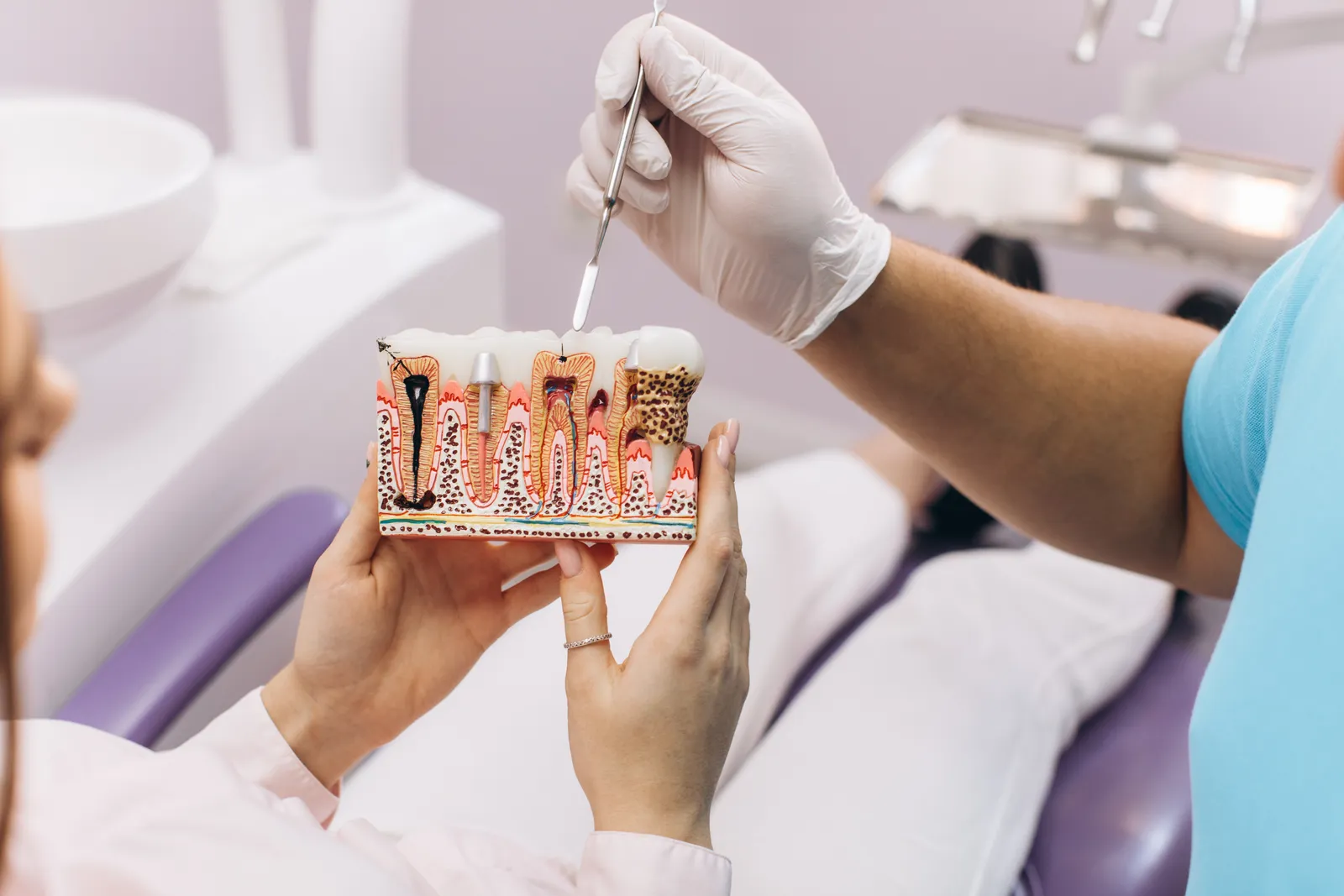
When a tooth has been missing for a while, or lost to gum disease or injury, the jawbone underneath it begins to shrink. Bone only stays strong when it's stimulated by the roots of natural teeth, so once that stimulation disappears, the body gradually reabsorbs the bone that's no longer needed. Over months and years, this can leave the jaw too thin or too shallow to safely support a dental implant, and it can even change the shape of your face and the fit of your bite.
Bone grafting is a well-established procedure that rebuilds this lost structure. We place a small amount of graft material into the area of bone loss, which acts as a scaffold that your own bone cells grow into over time, gradually forming new, solid bone. For many of our Metairie patients, this step is what makes implant placement possible again after years of living with a gap, a loose denture, or a sunken-in smile.
At Gallagher Family Dentistry, we never recommend grafting as a routine add-on. Every recommendation is based on a careful clinical evaluation of your jaw structure, your treatment goals, and what will give you the strongest, longest-lasting result. Our goal is always to rebuild a foundation sturdy enough to support real chewing function and a confident smile for years to come.
Bone loss develops quietly, often without any pain in its early stages. These are the most common situations where our team will discuss grafting as part of your treatment plan.
Because bone loss is painless and progressive, a thorough clinical exam with digital imaging is the only reliable way to know how much bone remains and whether grafting will strengthen your long-term results.
Several factors can contribute to the gradual loss of bone volume in the jaw, and they often overlap and compound one another over time.
Without a tooth root to stimulate it, the bone in that area begins reabsorbing within months, accelerating the longer the space stays empty.
Chronic bacterial infection below the gumline steadily breaks down the bone that anchors your teeth, often silently until teeth begin loosening.
An injury to the mouth or jaw can fracture or weaken bone structure, sometimes creating defects that need rebuilding before restorative work.
Dental abscesses and cysts can slowly destroy surrounding bone tissue; even after treatment, the resulting void often needs grafting to heal properly.
Traditional dentures rest on the gum and bone without stimulating it the way natural roots do, which allows the supporting ridge to flatten over years of wear.
Bone density naturally decreases with age, and some patients are simply more genetically prone to faster bone resorption after tooth loss.
Every bone grafting plan at our Metairie office is built around your specific anatomy and goals, from initial imaging through full healing.
We talk through your dental history, symptoms, and goals, whether that's getting ready for an implant or restoring a stable fit for a denture.
Digital X-rays or 3D cone-beam imaging let us measure exact bone height and width, so we know precisely how much grafting is needed, if any.
We select the right graft material and technique for your case, and outline the full timeline from grafting through healing and, if needed, implant placement.
Using local anesthesia and a careful, measured approach, we place the graft material and secure the site so your body can begin forming new bone.
We monitor healing with follow-up visits over the following months, confirming the bone has matured enough to support the next phase of your treatment.
A successful bone graft does more than fill a gap on an X-ray. It restores the structural foundation your smile depends on for years of comfortable, reliable function.
Many patients told elsewhere that they're "not a candidate" for implants simply need grafting first to create a stable, implant-ready foundation.
Because jawbone supports the soft tissue of your cheeks and lips, rebuilding it helps prevent the sunken, aged look associated with long-term tooth loss.
A stronger, better-contoured ridge gives removable dentures a more secure, comfortable base, reducing slipping and irritation during daily use.
Restoring bone volume helps stabilize the surrounding dental arch, reducing the shifting and drifting that often follows untreated tooth loss.
Jawbone is living tissue that responds directly to the forces placed on it. When a tooth root disappears, the bone around it stops receiving the chewing stimulation it needs to maintain its density, and the body begins redirecting those mineral resources elsewhere. This process, known clinically as resorption, tends to move fastest in the first twelve months after a tooth is lost and then continues more gradually for years afterward.
The longer this goes unaddressed, the more bone volume is lost, both in height and in width. A site that might have needed only a minor graft a year ago can require a more extensive rebuilding procedure later, simply because more time has passed. This is one of the main reasons we encourage patients not to delay replacing a missing tooth, even if it isn't causing discomfort right now.
Grafting at the right stage gives the body the scaffolding it needs to rebuild bone efficiently, often in combination with an extraction or shortly after. Acting earlier typically means a simpler procedure, a more predictable healing timeline, and a stronger platform for whatever restoration comes next.
Good habits in the days and weeks after your graft give the new bone material the best chance to integrate successfully.
Keep meals soft and cool for the first several days to avoid putting pressure directly on the healing graft site.
Smoking restricts blood flow and significantly slows bone healing, so avoiding it entirely during recovery greatly improves success rates.
Follow our rinsing instructions carefully to keep bacteria away from the site without disturbing the graft material underneath.
Heavy physical activity raises blood pressure and can increase swelling, so take it easy for a few days after your procedure.
Finish any prescribed antibiotics completely and use recommended pain management as directed to support smooth, infection-free healing.
Each check-up lets us confirm your bone is healing properly and catch any issue early, well before it becomes a bigger problem.
These habits give your body the best possible environment for healing, but they work alongside, not instead of, our professional monitoring and care.
"Patients are often surprised by how manageable bone grafting really is. We take the time to explain exactly what's happening in your jaw, and why rebuilding that foundation now protects your smile for decades ahead."
Answers to the questions we hear most often about bone grafting at our Metairie dental office.
The procedure itself is performed under local anesthesia, so you shouldn't feel pain during placement. Mild soreness and swelling are common for a few days afterward, similar to what you'd expect after a tooth extraction, and over-the-counter or prescribed pain relief typically manages it well.
Initial soft tissue healing usually takes one to two weeks, but full bone integration generally takes three to six months, depending on the size of the graft and your individual healing response. We schedule follow-up imaging to confirm the bone is solid enough before moving forward with an implant or other restoration.
We select from several biocompatible graft materials based on your specific case, including processed donor bone, synthetic bone substitutes, and, in select cases, bone from another site in your own mouth. We'll walk you through exactly which option we recommend and why during your consultation.
Not every implant case requires grafting. It depends entirely on how much bone volume remains at the site, which we determine through digital imaging. If your jaw has already lost significant height or width, grafting first gives the implant a secure, lasting foundation.
Yes, this is actually one of the most common and effective approaches. Placing graft material into the socket immediately after an extraction, known as ridge preservation, helps prevent the rapid bone loss that typically follows tooth removal and often simplifies future implant placement.
Cost varies depending on the size and location of the graft, the material used, and whether it's combined with another procedure like an extraction or implant. We provide a clear, itemized treatment estimate after your exam and work with most insurance plans and financing options to make care affordable.
Bone grafting is a routine, well-documented procedure with decades of clinical success behind it. We follow strict sterile protocols and use biocompatible materials, and we review your full medical history beforehand to ensure the procedure is appropriate and safe for your specific situation.
Placing an implant into bone that's too thin or too short greatly increases the risk of instability, exposed threads, or long-term implant failure. Grafting first, when needed, gives the implant a wider margin of healthy bone on every side, which supports better long-term stability.
BOOK YOUR VISIT
Join the Metairie families who trust Gallagher Family Dentistry New. New patients and emergencies are always welcome.