




Restorative Dentistry
Custom-crafted dentures and partials built to restore your bite, your confidence, and your comfort at every meal.
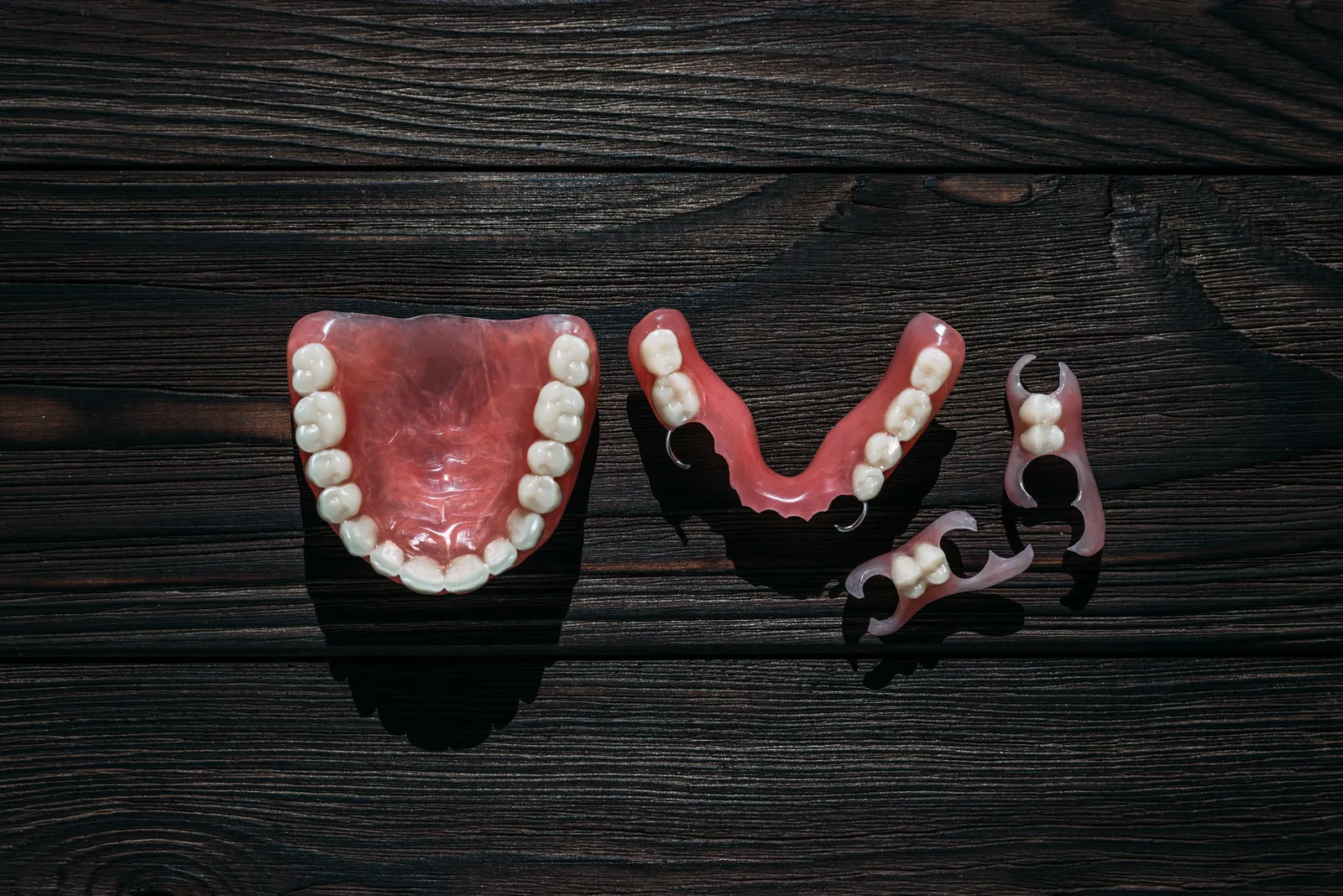
Losing one tooth or an entire arch changes more than the way your smile looks in the mirror. It changes how you chew your food, how clearly you speak, and how the muscles around your mouth and jaw support the lower third of your face. Without replacement teeth, the jawbone that once held those roots in place begins to shrink, the cheeks can start to sink inward, and everyday foods that used to be easy - corn on the cob, a crisp apple, a piece of steak - suddenly feel out of reach.
At Gallagher Family Dentistry, we treat dentures and partials as a genuine restorative solution, not a last resort. We take the time to evaluate your bite, your remaining teeth, your gum ridges, and your facial proportions so the appliance we design actually fits the mouth you have today - not a generic mold pulled off a shelf. Whether you need a complete upper and lower set, an immediate denture placed the same day teeth are removed, or a removable partial that fills gaps between your natural teeth, our goal is the same: a comfortable, stable, natural-looking result you can rely on for years.
We also understand that denture wearers have usually had a frustrating experience somewhere along the way - a plate that slips when they laugh, a sore spot that never fully heals, or a partial that feels bulky against the tongue. Our team listens closely to that history before we ever take an impression, because the fit of your new appliance depends as much on understanding your past experience as it does on precise measurements.
Tooth loss rarely happens all at once, and the discomfort it causes can build slowly enough that patients adapt around it without realizing how much function they have given up. These are the patterns we hear about most often during consultations.
If any of these sound familiar, it is worth having your mouth evaluated sooner rather than later. Bone loss and bite changes continue to progress the longer tooth replacement is delayed, which can make future treatment more involved and limit the range of options available to you.
Few patients lose teeth for just one reason. Most of the time, several factors build on each other over the years before a tooth finally has to come out or a bridge or crown fails.
Cavities that go untreated for years can destroy enough of the tooth structure that a filling or crown is no longer possible, leaving extraction as the only remaining option.
Periodontal disease breaks down the bone and ligament that anchor teeth, often loosening several teeth at once rather than just a single tooth.
Years of chewing wear down enamel and weaken old fillings and crowns, making teeth more prone to fracture later in life.
A fall, sports injury, or accident can fracture or knock out teeth that otherwise would have lasted many more years.
Some patients inherit thinner enamel, a naturally narrow jaw, or a bite pattern that places uneven stress on certain teeth over time.
Diabetes, osteoporosis, and certain medications can accelerate bone loss and gum deterioration around the teeth.
Tobacco restricts blood flow to the gums, slows healing, and significantly raises the risk of advanced periodontal breakdown.
Every patient's mouth heals and fits differently, so our denture and partial process is built around careful measurement, patient feedback, and small adjustments rather than a single rushed appointment.
We talk through your history, your concerns about past appliances, and what matters most to you - whether that's natural appearance, chewing strength, or all-day comfort.
We examine your gum tissue, remaining teeth, bite alignment, and take digital X-rays to assess bone volume and plan the right appliance design.
Detailed impressions and bite registrations are taken so your denture or partial base, teeth shade, and tooth shape are matched precisely to your mouth and face.
Once your appliance is fabricated, we check the fit in your mouth, confirm your bite feels even, and walk you through insertion and removal.
Gum tissue changes shape during the first weeks of wear, so we schedule follow-up visits to refine sore spots and fine-tune the fit as you adjust.
A properly made denture or partial does far more than fill a gap in your smile. It restores function that you may have quietly adjusted around for years without realizing how much had changed.
A stable fit lets you return to a wider, more satisfying diet, including foods you may have avoided for months or years.
Properly positioned teeth and a secure base reduce whistling, clicking, and slurred sounds caused by gaps or loose appliances.
Replacing lost teeth and bone support helps restore natural cheek and lip fullness, softening the sunken look that often follows tooth loss.
Natural-looking teeth that match your facial proportions let you laugh, speak, and smile without hesitation in social or professional settings.
Many patients focus on how a denture looks, but the fit against your gum ridge and bite alignment determine whether that appliance actually works for daily life. The jawbone naturally reshapes itself after teeth are removed, shrinking gradually over months and years. A denture made to fit a ridge from five years ago will rock and slip against a ridge that has since changed shape, no matter how natural the teeth look.
This is also why a bite that feels "off" by even a small amount can cause outsized problems. Uneven pressure concentrates force on certain areas of the gum tissue, leading to sore spots, and can place strain on the jaw joint that shows up as discomfort while chewing or even headaches. Partials carry an added consideration: the clasps that attach to your remaining natural teeth must be positioned precisely so they do not place excess stress on those teeth or loosen them over time.
This is why we do not treat denture and partial fitting as a one-visit transaction. Careful measurement at the start, combined with attentive follow-up adjustments as your gum tissue settles, is what separates an appliance you tolerate from one you genuinely forget you are wearing.
Good daily habits extend the life of your appliance and keep your gum tissue and remaining teeth healthy between professional checkups.
Brush your denture or partial daily with a soft brush and non-abrasive cleanser to remove plaque and prevent staining or odor.
Keeping your appliance moist overnight in water or a denture soak prevents the material from warping or losing its exact shape.
Cleaning over a folded towel or a sink full of water helps avoid cracks if it is accidentally dropped.
Rinsing your appliance and mouth after meals removes food particles that can irritate gum tissue over time.
For partials, continue brushing and flossing natural teeth thoroughly, since clasps rely on healthy teeth for secure support.
Regular visits let us check fit, monitor gum tissue, and catch small adjustments before they become bigger problems.
These habits make a real difference in comfort and longevity, but they work alongside professional care rather than replacing it. If your appliance ever feels loose, sore, or unstable, that is a sign to schedule an adjustment rather than wait it out.
"We never rush a denture fitting. Taking the time to get the bite and the ridge contact right the first time is what keeps patients wearing their new teeth with confidence instead of setting them aside in frustration."
Answers to the questions we hear most often from patients considering dentures or partials at our Metairie office.
BOOK YOUR VISIT
Join the Metairie families who trust Gallagher Family Dentistry New. New patients and emergencies are always welcome.