




Restorative Dentistry
Comfortable, carefully planned tooth removal for damaged, infected, or crowded teeth, with a clear path toward restoring your smile.
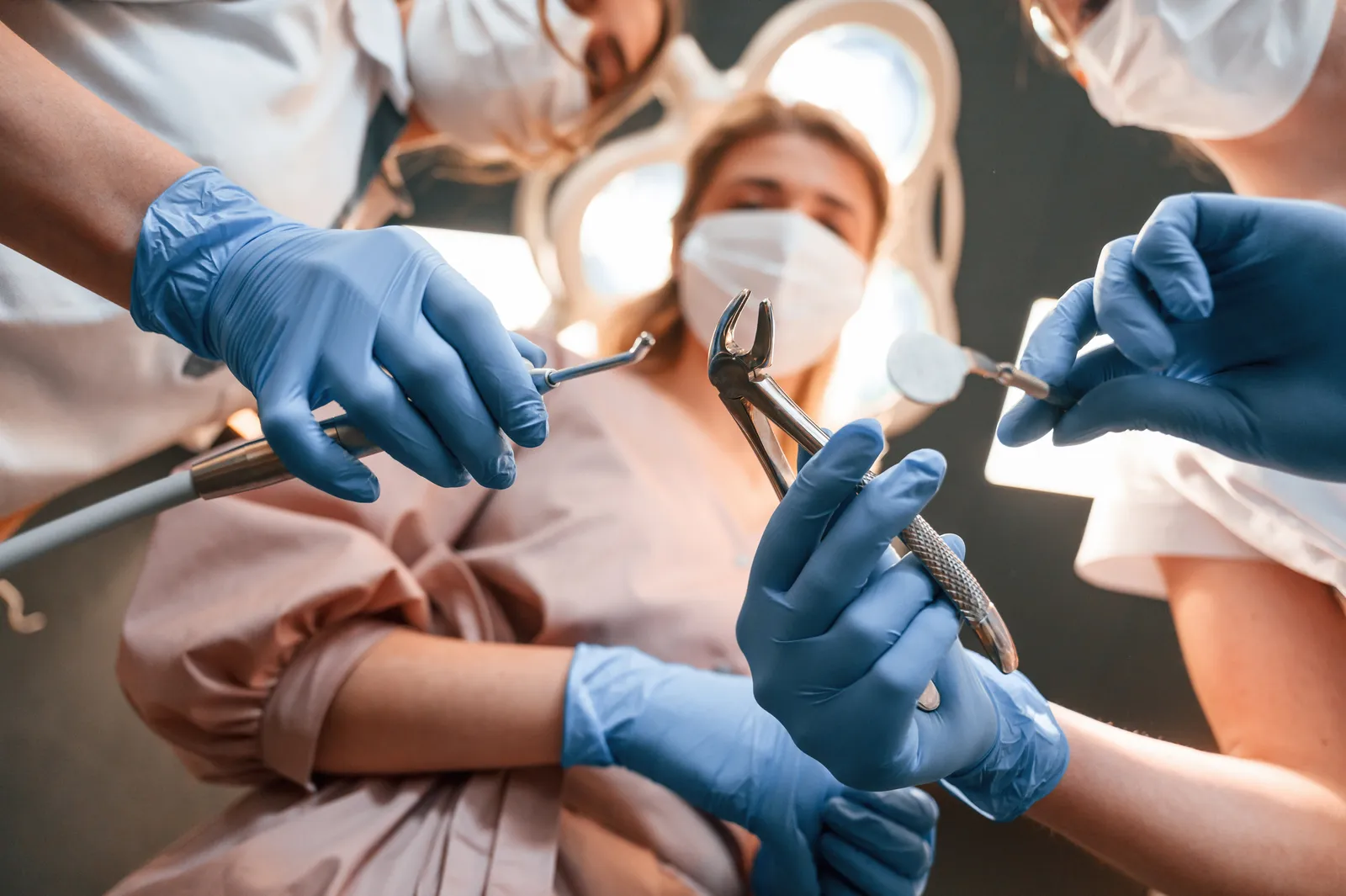
A tooth rarely needs to come out without good reason. Deep decay, a cracked root, advanced gum disease, or a wisdom tooth that never had room to grow in properly can all reach a point where saving the tooth would do more harm than good. When that happens, our team at Gallagher Family Dentistry recommends extraction not as a last resort to dread, but as a practical step that stops pain, clears infection, and protects the healthy teeth and bone around it.
Living with a failing tooth affects more than your smile. Chewing on one side to avoid pressure, waking up with jaw soreness, or tasting a persistent bad flavor from an infection are signs your body is compensating for a problem that will not resolve on its own. Left untreated, that single tooth can put the surrounding teeth, gums, and bone at risk, turning a contained issue into a larger restorative project.
Our approach centers on comfort and a clear next step. We take time to explain exactly why extraction is being recommended, walk through sedation options for anxious patients, and discuss replacement choices such as implants, bridges, or partial dentures before we ever pick up an instrument. You leave each visit knowing what happens next and why.
Not every toothache signals an extraction, but certain symptoms point toward damage that is beyond repair with a filling or root canal. Our dentists evaluate each tooth individually with x-rays and a clinical exam, but these are the patterns that most often lead to this conversation.
If you recognize any of these signs, a timely exam matters. Waiting can allow infection to spread into the jawbone or bloodstream, turning a straightforward procedure into a more complicated one.
Most extractions are the end result of a combination of factors building up over time, rather than one isolated event. Understanding the underlying cause also helps us plan how to protect the rest of your mouth going forward.
Cavities that go unaddressed for years can eat through enamel and dentin until the tooth's core structure collapses, leaving nothing solid to restore.
Chronic gum infection breaks down the bone and ligament that anchor a tooth in place, eventually leaving it too loose to function or save.
A sports injury, fall, or hard bite on something unexpected can fracture a tooth below the gumline where it cannot be rebuilt.
Third molars that lack room to erupt often grow sideways or remain partially buried, creating pressure, infection risk, and crowding.
When there is not enough space to align every tooth properly, removing one strategically placed tooth often gives braces or clear aligners room to work.
Occasionally a previously treated tooth develops a new infection or fracture that makes a repeat root canal unlikely to succeed long term.
Decades of grinding, clenching, or simple use can wear a tooth down to the point where there is not enough structure left to restore.
Some patients need a tooth removed before chemotherapy, organ transplant, or denture preparation to reduce infection risk during treatment.
Every extraction we perform follows a deliberate, patient-centered sequence. You will know what to expect at each stage, and we never move forward without your questions answered.
We talk through your symptoms, medical history, and any anxiety about the procedure so we can tailor the visit to your comfort level.
Digital x-rays let us see the root structure, bone density, and position relative to nerves before deciding on the safest removal approach.
We outline the exact extraction method, sedation option, and recovery timeline, along with replacement choices like implants or bridges if needed.
Using local anesthesia and, when appropriate, sedation, we remove the tooth with careful, unhurried technique to minimize pressure and discomfort.
We send you home with clear aftercare instructions and check in on healing, making sure you are comfortable and ready to discuss a tooth replacement plan.
Removing a failing tooth does more than stop pain in the moment. It protects the stability and health of everything around it, setting the stage for a restoration that fits comfortably and looks natural.
Once an infected or fractured tooth is out, the throbbing pressure and nerve pain that often accompany it resolve quickly during the healing process.
Clearing an infected tooth stops bacteria from spreading to adjacent teeth and reduces strain on the bite caused by avoiding one painful area.
Removing a tooth that cannot be saved opens the door to a durable, well-planned replacement, whether that is a dental implant, bridge, or partial denture.
Eating, speaking, and sleeping all become easier once a chronically painful or infected tooth is no longer part of daily life.
A tooth infection does not stay contained forever. Bacteria trapped inside a fractured or decayed tooth can travel into the surrounding bone, forming an abscess that spreads toward the jaw, sinuses, or even into the bloodstream in rare, severe cases. The longer an infected tooth sits untreated, the more bone and gum tissue it can compromise, which sometimes turns a simple extraction into a more involved surgical procedure.
Delaying treatment also affects the teeth next door. A tooth that is painful to bite on often shifts your chewing pattern to the opposite side, which can wear down healthy teeth unevenly and strain the jaw joint over time. Gaps left by a tooth that finally fails on its own, without a planned extraction and replacement, can also allow neighboring teeth to drift out of alignment.
Addressing a failing tooth early, while it is still isolated and manageable, almost always means a shorter procedure, a more predictable recovery, and a simpler path toward whatever replacement option makes sense for your mouth.
The days after an extraction matter just as much as the procedure itself. These habits help the extraction site heal cleanly and reduce the chance of complications like dry socket.
Avoid rinsing forcefully, spitting hard, or using a straw for the first 24 hours so the healing clot stays in place.
Applying ice in short intervals during the first day keeps swelling and discomfort to a minimum.
Yogurt, soup, and mashed vegetables give your mouth a break while the site begins to close over.
Starting the next day, a gentle warm salt rinse helps keep the area clean without disturbing healing tissue.
Both habits significantly raise the risk of dry socket and should be paused for at least several days after the procedure.
Following our prescribed pain and antibiotic schedule exactly supports comfortable, infection-free healing.
These habits make recovery smoother, but they are not a substitute for a professional follow-up if you notice unusual pain, swelling, or bleeding.
"We never take a tooth out without a plan for what comes next. Our goal is for every patient to leave knowing their mouth is healthier, and their smile has a clear path forward."
Common questions about tooth extractions at Gallagher Family Dentistry in Metairie, LA.
BOOK YOUR VISIT
Join the Metairie families who trust Gallagher Family Dentistry New. New patients and emergencies are always welcome.