




Cosmetic Dentistry
Discover a comfortable, nearly invisible way to straighten your teeth without the look or hassle of traditional metal braces.
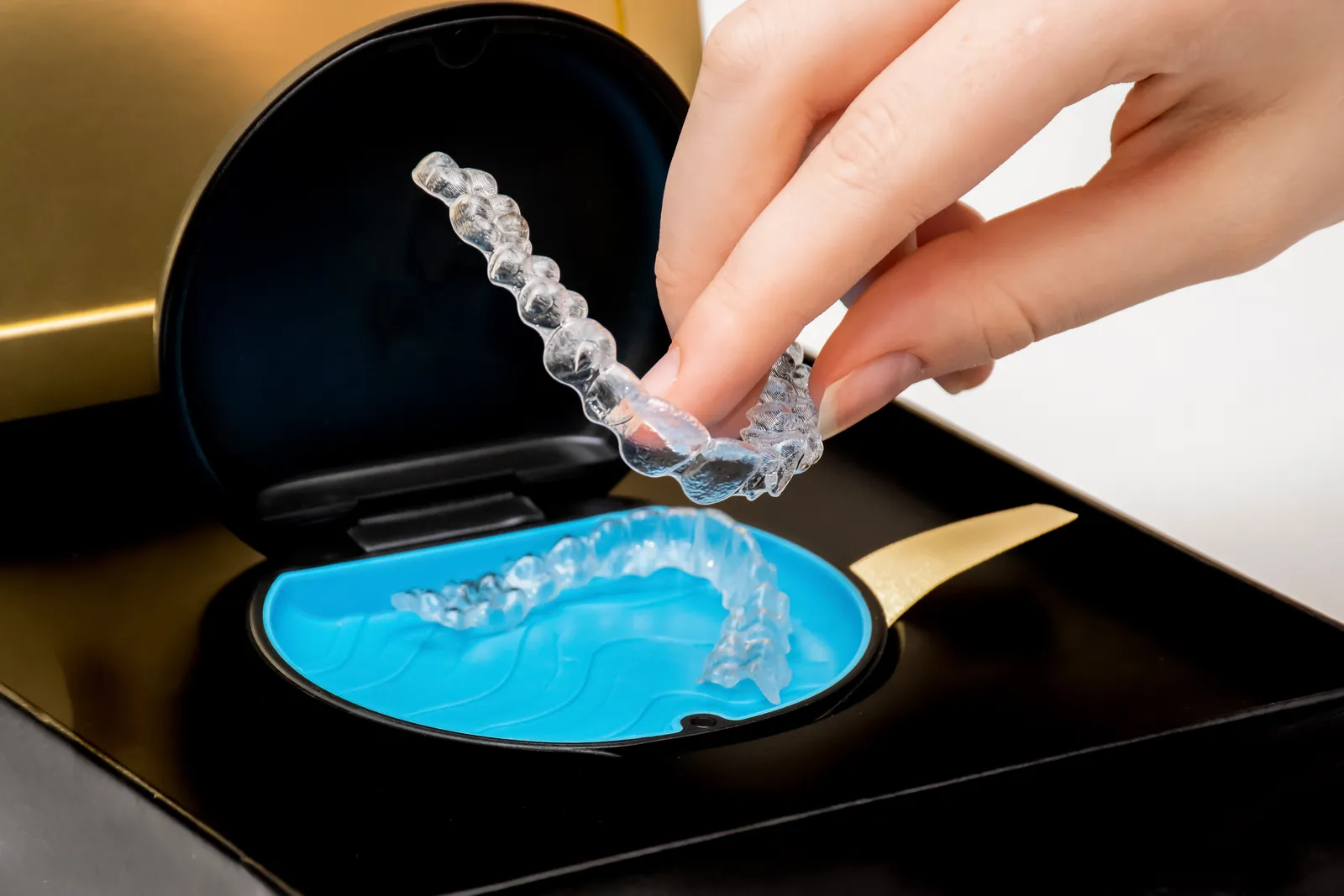
A crooked or crowded smile does more than affect how your teeth look in photos. Misaligned teeth can make flossing difficult, create uneven pressure on your jaw joint, trap plaque in hard-to-reach corners, and leave you self-conscious every time you smile at a meeting, a family gathering, or a first date. For many adults and teens in Metairie, traditional metal braces feel like an unwelcome detour from everyday life, which is exactly why Invisalign has become such a popular alternative at Gallagher Family Dentistry.
Invisalign uses a series of custom-made, nearly invisible aligner trays to gently and gradually move your teeth into their ideal position. As part of our cosmetic dentistry services, we approach every Invisalign case the same way we approach any smile transformation: with a full clinical evaluation first, a conversation about your goals second, and a treatment plan built around your bite, your timeline, and your budget third. No two smiles move the same way, and we do not believe in handing patients a generic box of trays without real dentist oversight along the way.
Whether you are dealing with mild crowding, noticeable gaps, an overbite, or you simply never finished orthodontic treatment as a teenager, our team can tell you honestly whether Invisalign is the right path for your mouth. We use digital scanning technology to map your treatment before you commit to anything, so you know what to expect before your first aligner ever touches your teeth.
Invisalign can correct a wide range of alignment issues, but it is not automatically the right choice for every bite. The signs below are common reasons patients in Metairie start asking about clear aligners, and reviewing them honestly with your dentist helps set realistic expectations from day one.
If any of these sound familiar, it is worth having a conversation with our team before symptoms progress. A short exam and digital scan tell us far more than guesswork ever could, and catching alignment issues early typically means a shorter, simpler treatment plan.
Crooked or shifting teeth rarely come from a single cause. Understanding what contributed to your bite helps us plan treatment that actually holds long-term, rather than simply nudging teeth back into a pattern that will drift again.
Many patients simply inherit a jaw too small to comfortably fit all of their adult teeth, leading to natural crowding that develops with age.
Losing a baby tooth too early or an adult tooth to decay allows neighboring teeth to drift into the empty space, throwing off the whole bite.
Prolonged thumb-sucking, pacifier use, or tongue thrusting during developmental years can push teeth and jaw structures out of their natural alignment.
Chronic grinding or clenching wears down enamel unevenly and can gradually shift tooth position over months and years.
Teeth continue to shift subtly throughout adulthood, which is why even patients with straight teeth as teenagers often notice crowding years later.
Untreated gum disease can weaken the bone supporting your teeth, allowing them to loosen and drift out of their original position.
Every Invisalign plan at Gallagher Family Dentistry follows a clear, predictable sequence. We believe patients deserve to know exactly what is happening at every stage of treatment, not just a vague timeline.
We start by listening. You tell us what bothers you about your smile and what you hope treatment will achieve, whether that is cosmetic confidence or functional comfort.
Digital X-rays, a bite assessment, and a 3D intraoral scan let us see exactly how your teeth and jaw relate to one another before any treatment is proposed.
Using your scan, we map out the exact tooth movements your case requires and show you a simulated preview of your projected final smile before you commit.
You receive a series of custom aligners to wear roughly 20 to 22 hours per day, switching to the next set in the sequence every one to two weeks as directed.
We check your progress at periodic visits, make adjustments if needed, and fit you with a retainer once treatment finishes to protect your new alignment for years to come.
Invisalign treatment is about more than aesthetics, although the cosmetic improvement is often what brings patients through our door first. A properly aligned bite affects nearly every function your mouth performs every single day.
Straighter teeth with even spacing are far easier to brush and floss thoroughly, which lowers your long-term risk of cavities and gum disease.
Correcting an uneven bite distributes chewing pressure more evenly, often reducing jaw soreness, clicking, and uneven enamel wear over time.
Clear aligners are nearly invisible in everyday conversation and photos, which makes treatment far less noticeable than traditional braces at work or school.
Because aligners come out for eating and cleaning, you avoid the food restrictions and bracket maintenance that come with fixed metal braces.
Patients consistently tell us that smiling without hesitation in photos, interviews, and social settings is one of the most rewarding outcomes of treatment.
Digital treatment planning lets us show you a projected outcome before you start, so there are no surprises about how your final smile will look.
Invisalign works through gentle, consistent pressure applied over days and weeks. Each aligner in your series is designed to move your teeth a fraction of a millimeter in a specific direction, and that movement only progresses properly when the aligner is actually on your teeth for the recommended 20 to 22 hours a day. Removing aligners too frequently, whether for snacking, forgetting after meals, or skipping nights, interrupts that steady pressure and can slow treatment considerably.
Inconsistent wear does not just extend your timeline. It can also cause an aligner to no longer fit snugly, since teeth may not have moved as far as the digital plan anticipated. When this happens, we sometimes need to create a new scan or adjust the sequence, which adds time and occasionally additional cost. This is one of the main reasons we check in with patients at regular intervals, both to track progress with a hands-on exam and to troubleshoot early if wear time has slipped.
The good news is that most adults adapt to wearing aligners full-time within the first few days. Removing them only for meals, brushing, and flossing becomes routine quickly, and the discreet appearance makes it easy to stay compliant throughout the entire course of treatment.
Good daily habits make a real difference in how smoothly your treatment progresses and how your teeth and gums feel along the way.
Rinse and gently brush trays each time you remove them to prevent buildup, odor, and cloudiness over your treatment course.
Brush and floss after meals before putting trays back in to avoid trapping food particles against your teeth for hours.
Keep removed aligners in their case rather than a napkin or pocket to avoid loss, warping, or accidental damage.
Remove aligners before drinking coffee or tea, since heat can warp the plastic and compromise how accurately it fits.
Set reminders to switch trays on schedule, and note down the date you start each new aligner in the series.
Routine progress visits let us catch small fit issues early, long before they become bigger setbacks in your timeline.
These habits make a real difference, but they work alongside professional monitoring rather than replacing it. Only a dentist can confirm your teeth are tracking correctly against the digital plan.
"Patients are often surprised how little Invisalign disrupts their day-to-day life. We make sure every plan is realistic, well-monitored, and built around how you actually live, not a one-size-fits-all timeline."
Answers to the questions we hear most often from Metairie patients considering Invisalign treatment.
BOOK YOUR VISIT
Join the Metairie families who trust Gallagher Family Dentistry New. New patients and emergencies are always welcome.