




Restorative Dentistry
A fixed, natural-looking solution that closes the gap left by missing teeth and restores how you chew, speak, and smile.
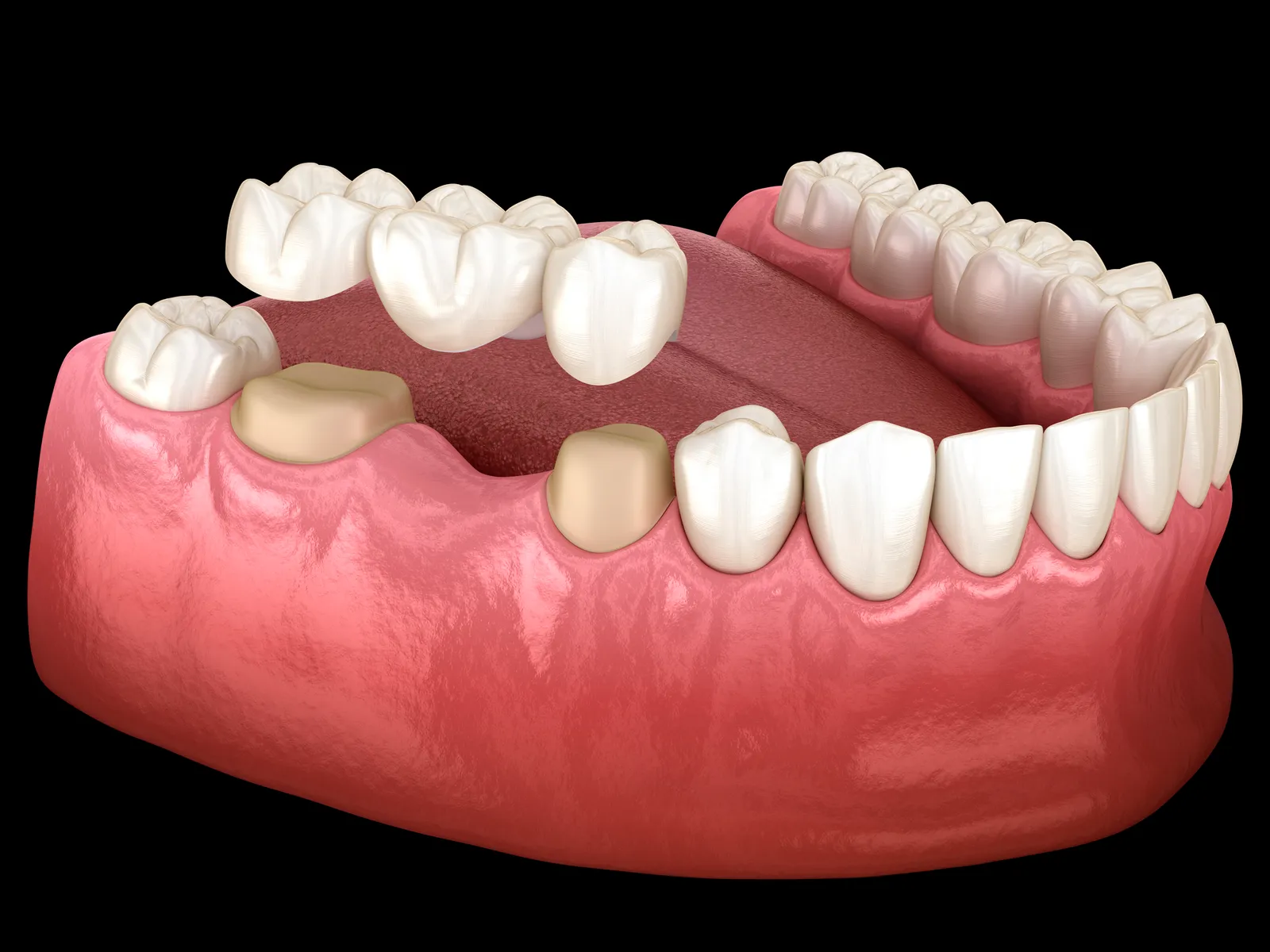
A missing tooth never stays quiet for long. The teeth beside the gap begin to drift, the opposing tooth can over-erupt into the empty space, and your bite gradually shifts out of balance. Chewing becomes lopsided, certain foods get avoided, and many patients notice their speech changes slightly because the tongue has learned a new pattern around the open space. Dental bridges address this directly by filling the gap with a fixed, custom-made restoration that is anchored to the natural teeth or implants on either side.
At Gallagher Family Dentistry, we treat bridgework as a bite-restoring procedure, not just a cosmetic patch. A well-designed bridge redistributes chewing forces evenly across your arch, protects neighboring teeth from excess wear, and supports the soft tissue and facial structure that can collapse inward when a tooth is missing for too long. Our team takes the time to evaluate your bite, your jawbone, and the surrounding teeth before recommending the bridge design that will hold up for years, not just look good at the first appointment.
Patients in Metairie come to us after losing a tooth to decay, trauma, or an unsuccessful extraction, and many are surprised at how quickly a bridge restores normal function. Within a couple of visits, you are chewing on both sides again, speaking without a lisp or whistle, and smiling without instinctively covering your mouth. We walk you through material choices, cost expectations, and realistic timelines so there are no surprises along the way.
Every patient's mouth tells a slightly different story, and the symptoms of a missing tooth or an aging restoration can show up in subtle ways before they become obvious problems. Here are common signs we hear about in our Metairie office that often point toward a bridge being the right next step.
If any of these sound familiar, it's worth getting a professional evaluation sooner rather than later. The longer a gap sits untreated, the more the surrounding bone and teeth shift, which can make future treatment more involved and more costly.
Understanding why a tooth was lost helps us plan a bridge that won't run into the same problem twice. Most cases we see in Metairie trace back to one or a combination of these contributing factors.
Deep cavities that reach the nerve or compromise most of the tooth structure often leave extraction as the only reliable option.
Periodontal disease breaks down the bone and ligaments holding a tooth in place, eventually causing it to loosen or fall out.
A sports injury, fall, or car accident can fracture or knock out a tooth beyond the point of repair, requiring a planned replacement.
A previously treated tooth can still fracture or become reinfected years later, sometimes making extraction the safer long-term choice.
Years of unmanaged clenching and grinding gradually fracture tooth structure, weakening teeth until they can no longer be saved.
Tobacco restricts blood flow to the gums, accelerating bone loss and making teeth far more vulnerable to infection and failure.
Some patients are naturally predisposed to weaker enamel or lower bone density, which raises the risk of tooth loss over a lifetime.
We build every bridge around your specific bite, jawbone condition, and cosmetic goals rather than relying on a one-size-fits-all approach. Here is what you can expect at each stage of treatment.
We talk through your history, how the gap is affecting your daily life, and your goals for the finished smile. This is where we answer questions and outline realistic timelines.
Digital X-rays and a close bite exam confirm whether the abutment teeth are strong enough to support a bridge, or whether an implant-supported design is a better long-term choice.
We present material options, such as porcelain-fused-to-metal or all-ceramic, along with a clear cost breakdown and estimated number of visits before any irreversible steps begin.
Supporting teeth are gently reshaped, precise impressions are taken, and a comfortable temporary bridge protects the area while your custom restoration is fabricated.
Once the fit, bite, and shade are confirmed, the bridge is permanently cemented. We schedule a follow-up visit to check comfort and make sure it's functioning exactly as planned.
A bridge is about far more than filling a visible gap. Done correctly, it restores the function and stability your bite had before the tooth was lost.
With the gap closed, chewing force is distributed evenly again, which takes pressure off your remaining teeth and jaw joint.
Filling the space your tongue and lips had adjusted to removes whistles, lisps, and other subtle speech changes.
A bridge prevents neighboring teeth from drifting and keeps your opposing teeth from over-erupting into the open space.
Filling the gap helps support the cheeks and lips, preventing the sunken look that long-term tooth loss can cause.
Custom shading and shaping mean your bridge blends seamlessly with your natural teeth, so you can smile without hesitation.
With proper hygiene and regular checkups, a well-made bridge can comfortably serve you for ten years or longer.
The jawbone under a missing tooth relies on the pressure of chewing to stay dense and healthy. Once that stimulation disappears, the bone begins to resorb within months, and the gum tissue follows that same downward shift. This is why patients who wait years to address a gap sometimes find their bridge options more limited than if they had come in soon after losing the tooth.
At the same time, the teeth bordering the open space are under constant mechanical pressure to move. Without something anchoring them in place, they tip, rotate, or shift toward the gap, which throws off the way your upper and lower teeth meet. That misalignment doesn't stay isolated to one area; it gradually spreads tension across your entire bite, sometimes contributing to jaw soreness or headaches.
A bridge interrupts that chain reaction early. By anchoring a replacement tooth to the supporting teeth on either side, it holds everything in its correct position and keeps the forces of chewing distributed the way nature intended. That's why we encourage patients not to delay this decision once a tooth has been lost or extracted.
A bridge is only as durable as the habits supporting it. These everyday practices keep your restoration and the teeth supporting it in good shape for years to come.
Cleaning under the connected section of a bridge prevents plaque buildup that regular flossing can't reach.
Consistent brushing protects the abutment teeth from decay, which is one of the most common causes of bridge failure.
Hard objects can chip porcelain or loosen the cement holding your bridge securely in place.
Nighttime clenching puts significant strain on a bridge, and a custom guard spreads that pressure safely.
Regular visits let us catch small issues with the fit or the supporting teeth before they turn into bigger repairs.
Reducing soda and acidic beverages protects the enamel on the natural teeth anchoring your bridge in place.
These habits go a long way, but they work best alongside regular professional monitoring. If anything ever feels loose, sharp, or uneven, reach out to our office rather than waiting for your next scheduled visit.
"We've treated patients who put off replacing a tooth for years out of worry over cost or discomfort. Once they see how a well-fitted bridge feels and how simple the process actually was, the regret is almost always that they waited so long."
Answers to the questions we hear most often from Metairie patients considering a dental bridge.
BOOK YOUR VISIT
Join the Metairie families who trust Gallagher Family Dentistry New. New patients and emergencies are always welcome.