




Restorative Dentistry
Comfortable, experienced extraction care for impacted or problematic wisdom teeth, right here in Metairie.
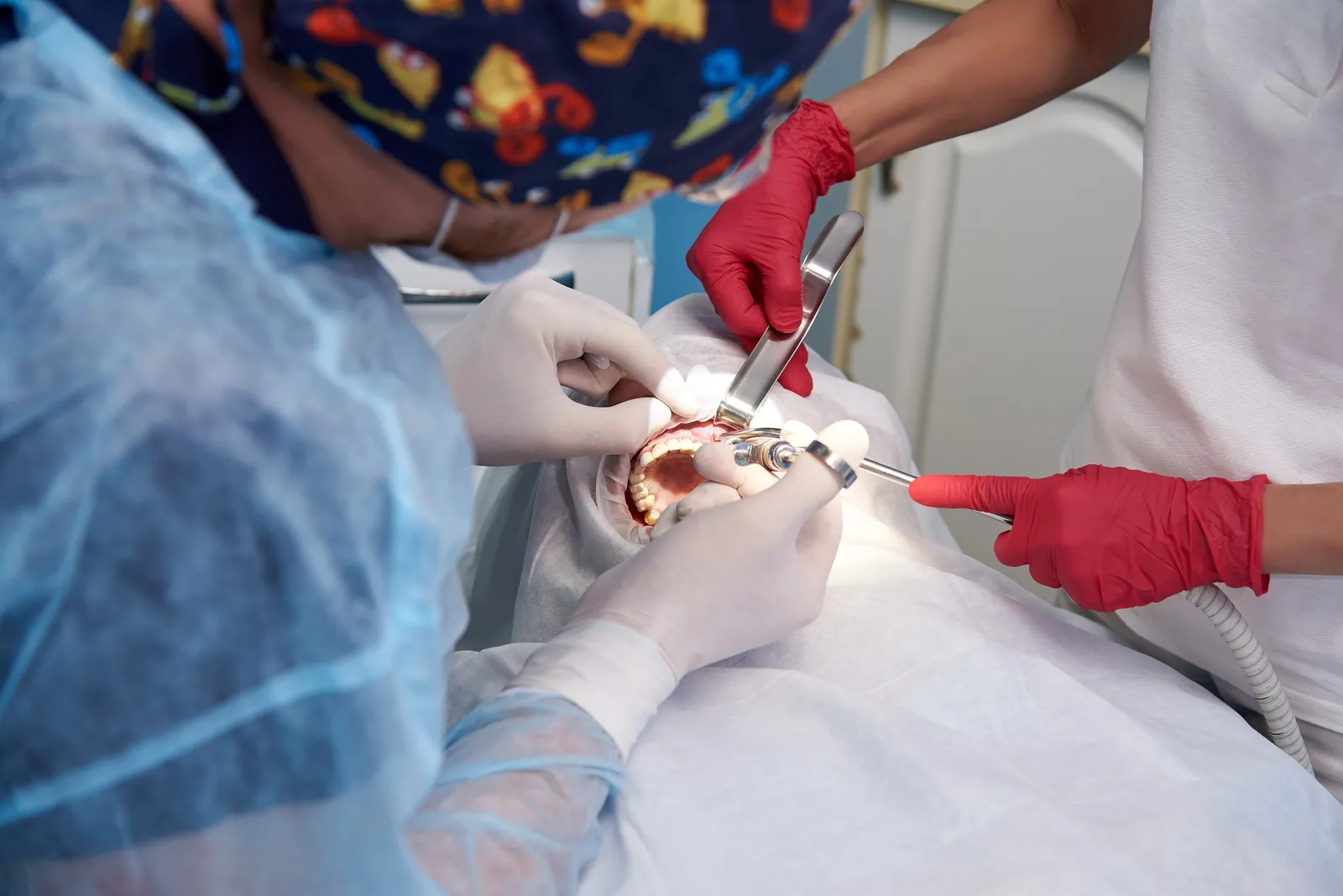
Your third molars, better known as wisdom teeth, typically begin pushing through the gums sometime between the late teens and mid-twenties. For many patients, there simply isn't enough room at the back of the jaw to accommodate them properly. Instead of erupting into a healthy, functional position, these teeth often come in sideways, partially break through the gum tissue, or stay trapped beneath the bone entirely. This condition, known as impaction, is one of the most common reasons patients in Metairie visit our office for an evaluation.
Left untreated, impacted or misaligned wisdom teeth can quietly cause problems that build over months or years. You might notice a dull ache along your jaw, swelling near the back of your gums, or difficulty opening your mouth fully when chewing. Some patients experience recurring infections, bad breath that won't resolve with brushing, or pressure that seems to radiate toward the ear. These symptoms often interfere with everyday comfort, whether you're trying to enjoy a meal with your family or simply get a full night's sleep without jaw tension waking you up.
At Gallagher Family Dentistry, part of our broader restorative dentistry philosophy is identifying and addressing structural problems before they escalate into pain, infection, or damage to neighboring teeth. We take a thorough, image-based approach to every wisdom tooth evaluation, examining not just the tooth itself but how it relates to your bite, your nerves, and the rest of your dental anatomy. Our goal is always a clear, honest recommendation and a removal process that keeps you as comfortable as possible from start to finish.
Not every wisdom tooth causes obvious trouble right away, which is exactly why many problems go unnoticed until they flare up. The symptoms below are the ones we hear about most often from patients in our Metairie office, and they can appear gradually or show up suddenly after months of quiet discomfort.
Because these symptoms can mimic other dental or sinus issues, a professional evaluation with digital imaging is the only reliable way to confirm what's actually happening beneath the gum line and decide whether removal is the right next step.
Several anatomical and developmental factors often combine to make wisdom teeth more likely to cause pain or complications. Recognizing these contributing causes helps explain why removal is so frequently recommended, even when a tooth hasn't fully emerged yet.
Modern jaws are often smaller than the space needed to fit a full set of 32 teeth, leaving no clear path for third molars to erupt normally.
Wisdom teeth frequently develop at an angle instead of pointing straight up, pressing into adjacent molars or into surrounding bone as they try to emerge.
A partially erupted tooth creates a small flap of gum tissue, called an operculum, where food debris and bacteria collect and are nearly impossible to clean thoroughly.
Some wisdom teeth never break through the gum at all, remaining fully encased in jawbone where they can develop cysts or slowly damage neighboring tooth roots.
Family history plays a real role in jaw size and tooth positioning, so patients with a parent who needed extractions are more likely to face similar issues.
Teeth that emerge later in life, after the jawbone has fully hardened, face more resistance, increasing the chance of partial or incomplete eruption.
Every wisdom tooth case is different, so we build a treatment plan around your specific anatomy, symptoms, and comfort needs rather than applying a one-size-fits-all approach.
We start by listening to your symptoms, reviewing your dental history, and discussing any pain, pressure, or concerns you've noticed near your back molars.
Digital X-rays let us see the exact position, angle, and depth of each wisdom tooth, along with its proximity to nerves and adjacent tooth roots.
We walk you through whether removal is recommended, which sedation option fits your comfort level, and what recovery timeline to expect for your specific case.
Using local anesthesia and, when appropriate, additional sedation, we carefully extract each tooth with techniques designed to minimize trauma to surrounding tissue.
We provide clear aftercare instructions and remain available for follow-up questions, checking your healing progress to confirm everything is on track.
Removing problematic wisdom teeth does more than eliminate a single sore spot; it resolves an ongoing source of pressure and infection risk that affects your whole mouth.
Once the source of inflammation is removed, the dull jaw ache and throbbing pressure that built up over weeks or months typically resolve within days.
Clearing the impacted tooth stops the crowding force that pushes against your second molars, protecting their roots and alignment long term.
Removing the gum pocket where bacteria collected significantly reduces your chances of recurring gum infections and associated swelling.
Many patients notice they sleep more soundly once jaw tension and nighttime discomfort from an erupting tooth are no longer a factor.
Unlike a sore muscle or minor gum irritation, an impacted wisdom tooth is a structural problem, not a temporary one. The jawbone doesn't reshape itself to make room, and a tooth growing at the wrong angle won't correct its course over time. Instead, the pressure it places on neighboring teeth and bone tends to stay constant or gradually increase, which is why symptoms often return again and again even after they seem to settle down for a few weeks.
This ongoing pressure also affects the health of the teeth around it. We frequently see early decay or bone loss on the back surface of second molars in patients who've put off wisdom tooth evaluation, simply because that surface is so difficult to clean around a partially erupted or angled tooth. The longer the situation continues, the more likely it becomes that treatment will need to address more than just the wisdom tooth itself.
That's why we recommend evaluation sooner rather than later, even if symptoms feel mild or occasional. Addressing an impacted wisdom tooth while it's still straightforward to remove generally means a smoother procedure, a quicker recovery, and far less risk to the healthy teeth next to it.
Good habits before and after your procedure make a meaningful difference in how comfortably and quickly you heal.
Soup, yogurt, and mashed potatoes reduce strain on the extraction site during the first several days of healing.
Applying ice to the jaw in the first 24 hours helps control swelling and keeps discomfort manageable.
Suction can dislodge the healing blood clot, so skip straws, smoking, and vigorous rinsing for several days.
A gentle warm salt water rinse starting the day after surgery helps keep the area clean without irritating the tissue.
Keeping your head elevated and avoiding strenuous exercise for a few days supports faster, more comfortable healing.
Following our prescribed pain management and antibiotic schedule, if given, helps prevent infection and keeps you comfortable.
These habits support healing after your procedure, but they're never a substitute for a professional evaluation if you notice ongoing pain, fever, or unusual swelling.
"We know the idea of having a tooth removed can feel intimidating. Our goal is to make the entire experience as calm and predictable as possible, from your very first scan to your final follow-up check."
Answers to the questions we hear most often from patients in Metairie considering wisdom teeth removal.
BOOK YOUR VISIT
Join the Metairie families who trust Gallagher Family Dentistry New. New patients and emergencies are always welcome.